

back to blog

Can You Install Hardwood Floors Over Radiant Heat? A DMV Homeowner’s Guide
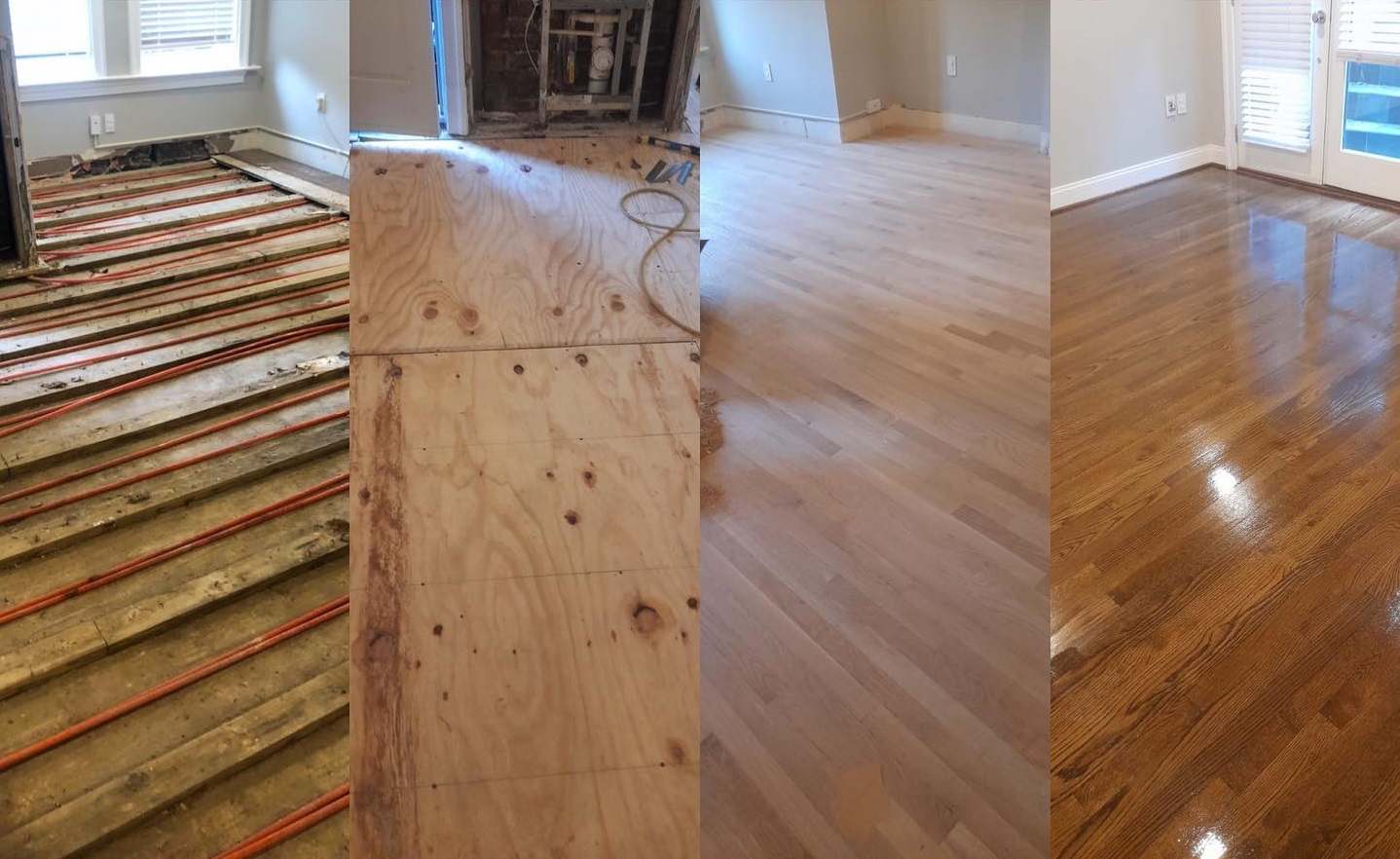
Many homeowners in the DMV face a tough choice when upgrading their floors: can hardwood work over radiant heat without damage? The fear of warped boards or blocked warmth stops more remodels than you’d expect. This guide will clear up the confusion, showing you which options like engineered hardwood radiant heat setups really hold up—and what Maryland flooring contractors recommend for lasting results.
Understanding Radiant Heat and Flooring Compatibility
Radiant heating systems have become a go-to choice for luxury homes across Maryland, Virginia, and DC. These systems warm your home from the ground up, creating consistent comfort that traditional HVAC just can’t match. But here’s the catch: not every flooring material plays nice with radiant heat.
When you’re planning a high-end renovation or building your dream home, the last thing you want is to install beautiful hardwood floors only to watch them buckle, gap, or cup within a year. The good news? With the right knowledge and materials, you absolutely can have both radiant warmth and stunning wood floors.
How Radiant Heat Affects Flooring Materials
Radiant heating works by running warm water through tubes or electric elements beneath your floor. This creates gentle, even heat that rises through your flooring material. The challenge comes from two main factors: heat transfer and moisture content.
Wood is a natural material that expands when it absorbs moisture and contracts when it dries out. Radiant heat systems create a consistent warm environment beneath your floors, which can dry out certain types of wood flooring over time. This drying effect is what causes those nightmare scenarios of warped or cracked boards.
The key is choosing flooring materials that can handle temperature changes while still allowing heat to pass through effectively. Some materials block heat transfer, making your expensive radiant system work harder and cost more to run. Others conduct heat well but can’t handle the stress.
Best Flooring for Radiant Heating Systems
Let’s talk about your real options. When Maryland flooring contractors evaluate the best flooring for radiant heating, they look at three main qualities: dimensional stability, heat conductivity, and moisture resistance.
Engineered Hardwood: The Smart Choice
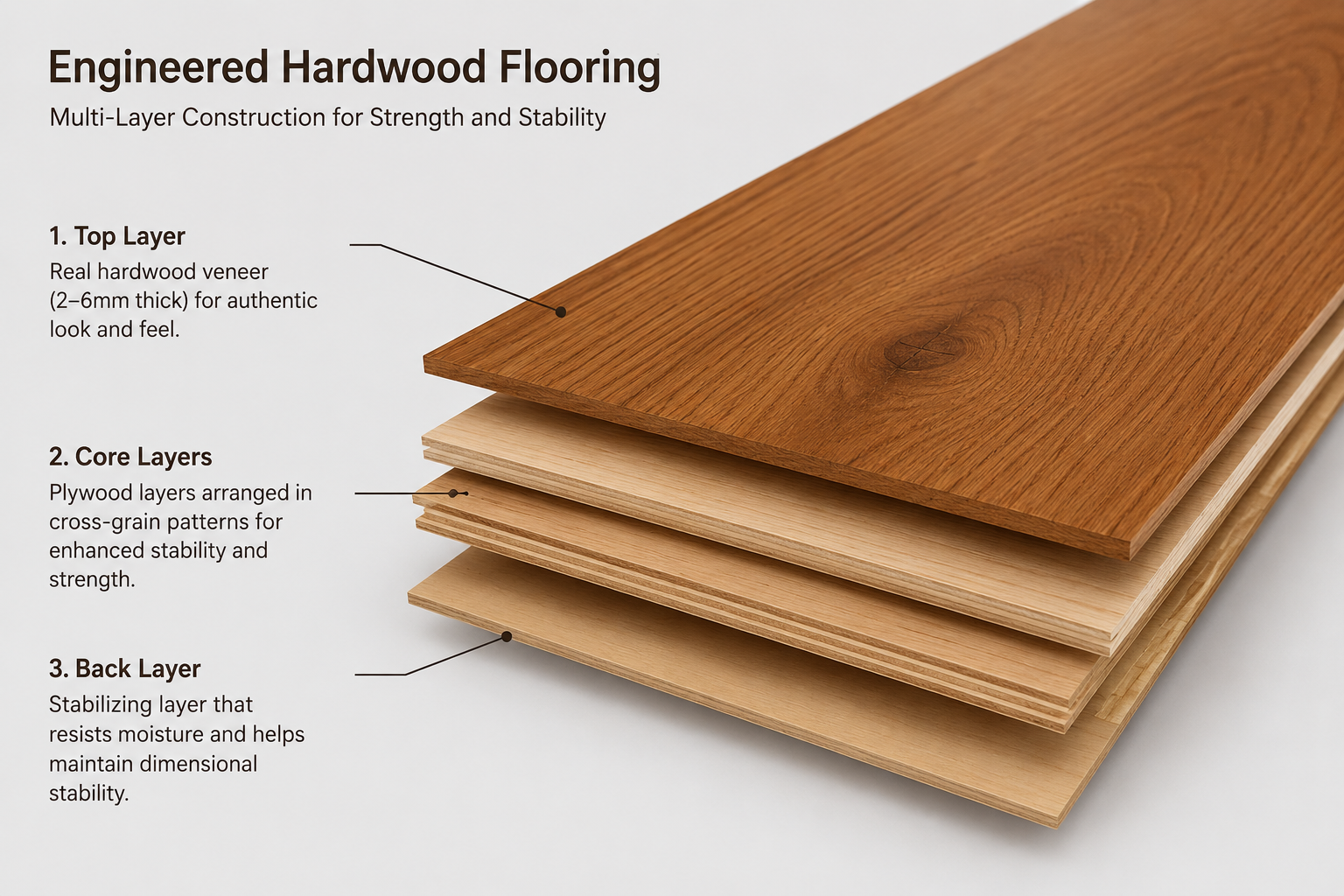
Engineered hardwood radiant heat compatibility is excellent, which is why it’s become the top recommendation for luxury installations. Unlike solid hardwood, engineered wood is built in layers. The top layer is real hardwood (usually 2-6mm thick), while the core layers are made from plywood or high-density fiberboard arranged in cross-grain patterns.
This construction makes engineered wood much more stable than solid hardwood. When temperatures fluctuate, those cross-grain layers counteract each other, preventing the dramatic expansion and contraction that causes problems. You get the authentic look and feel of real wood without the worry.
Sarah from Bethesda shared her story with us: “We installed engineered oak over our radiant system three years ago. I was nervous at first, but our floors still look perfect. The warmth comes through beautifully, and we haven’t seen a single gap or buckle.”
When selecting engineered hardwood over radiant heat, stick with planks that are 3/8″ to 1/2″ thick. Thicker boards can insulate too much and reduce heat transfer. Also, choose wider planks (5″ or more) when possible, as they’re generally more stable than narrow strips.
Solid Hardwood: Proceed with Caution
Can you install solid hardwood over radiant heat? Yes, but with significant limitations. If your heart is set on solid wood, you’ll need to follow strict guidelines.
First, choose only certain species. Quartersawn white oak, hickory, and mesquite are among the most stable options. Avoid maple, beech, and any exotic species with high dimensional change coefficients. These woods move too much with moisture and temperature changes.
Second, keep your planks narrow. Boards wider than 3″ are more likely to cup or crown over radiant heat. This limits your design options quite a bit.
Third, you’ll need to maintain strict environmental controls. Your home’s humidity should stay between 35-45% year-round, and floor surface temperatures should never exceed 80°F. This means careful system programming and possibly adding whole-home humidification.
Most Maryland flooring contractors will be honest with you: solid hardwood over radiant heat is risky. The installation costs more, requires more maintenance, and still carries higher failure rates than engineered alternatives.
Alternative Options Worth Considering
If you’re flexible on having real wood, there are other materials that work beautifully with radiant systems.
Luxury Vinyl Plank (LVP)
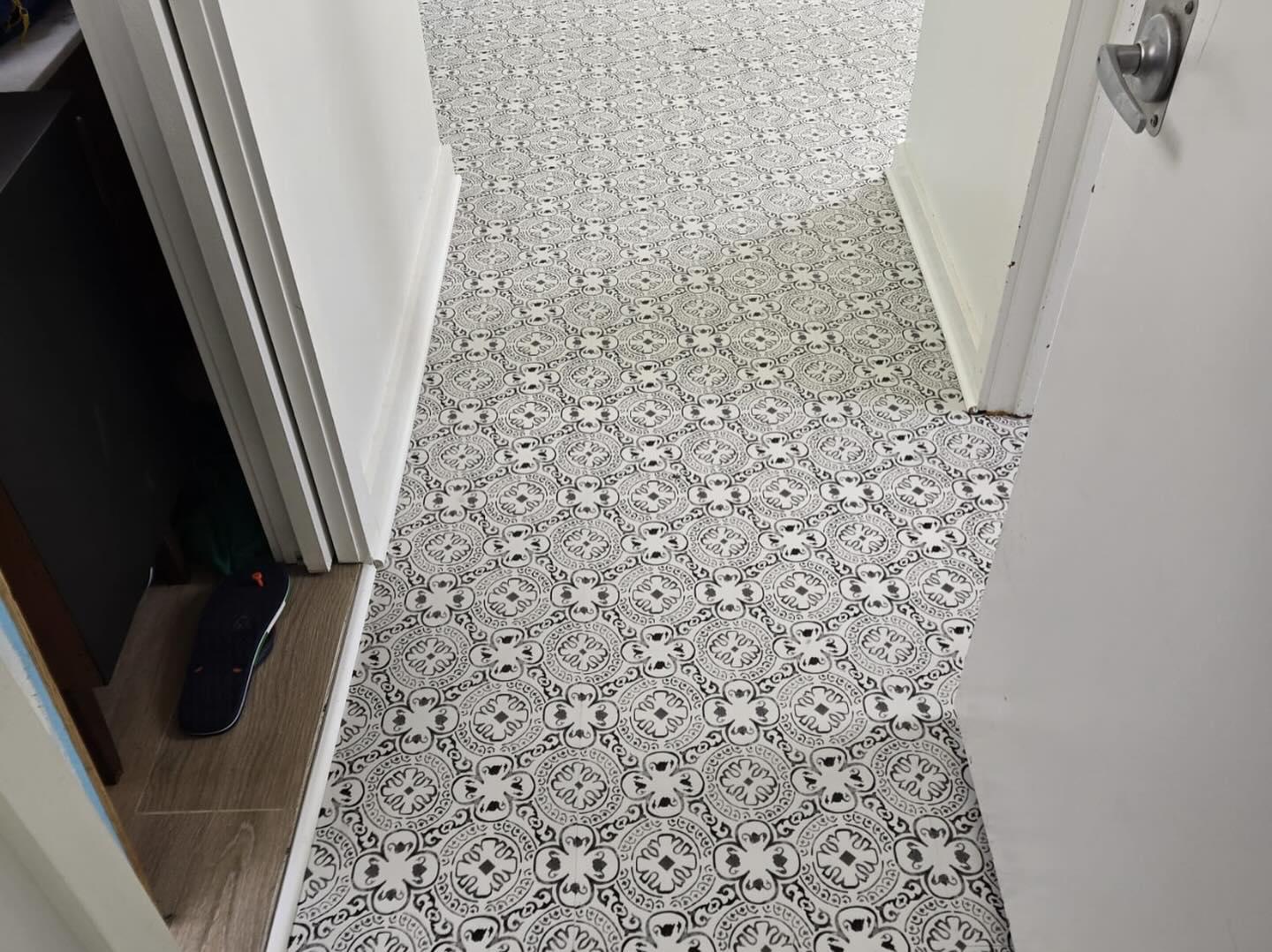
LVP radiant heat compatibility is outstanding. Modern luxury vinyl products look remarkably realistic, and they’re completely stable over radiant systems. The material doesn’t expand or contract with temperature changes, and it conducts heat well.
LVP is also waterproof, making it perfect for bathrooms, kitchens, and basements with radiant heat. The price point is lower than engineered hardwood, which lets you allocate more budget to other parts of your renovation.
Tom, a property manager in Arlington, told us: “I’ve installed LVP over radiant heat in five rental properties now. Tenants love the warm floors, and I love that I don’t get calls about flooring problems. It’s a win all around.”
Porcelain Tile and Natural Stone
Tile and stone are the gold standard for radiant heat applications. They conduct heat extremely well and are completely unaffected by temperature changes. If you’re doing a luxury bathroom or kitchen, this combination is hard to beat.
The downside? Tile and stone feel harder underfoot than wood and don’t provide the warm aesthetic many homeowners want in living spaces and bedrooms. They’re best used strategically rather than throughout your entire home.
What Maryland Flooring Contractors Check Before Installation
Professional installation makes all the difference when putting hardwood over radiant heat. Here’s what experienced Maryland flooring contractors verify before starting your project.
System Type and Temperature Controls
Not all radiant systems are created equal. Hydronic (water-based) systems are gentler on flooring than electric systems because they maintain more consistent temperatures. Your contractor should confirm your system has programmable controls that can limit surface temperatures.
The flooring surface should never exceed 80°F. Quality installations include floor temperature sensors that shut the system down if it gets too hot. If your current system lacks these controls, you’ll need to upgrade before installing wood flooring.
Moisture Testing
Your contractor should perform moisture testing on both your subfloor and your new flooring materials before installation. Concrete subfloors are especially prone to moisture issues. Calcium chloride tests or relative humidity probes will show if your slab is dry enough for wood installation.
The new flooring should also be acclimated to your home’s environment for at least a week before installation. This lets the wood adjust to your home’s temperature and humidity levels, reducing post-installation movement.
Proper Underlayment Selection
The wrong underlayment can block heat transfer or cause flooring failure. For engineered hardwood radiant heat installations, your contractor should use a thin underlayment specifically rated for radiant applications. Many products are only 1-2mm thick to avoid insulating your floors from the heat source.
Some engineered products can be glued directly to the subfloor with no underlayment at all. This provides the best heat transfer but requires a perfectly flat, clean substrate.
Installation Methods That Work
How your flooring attaches to the subfloor matters just as much as which product you choose.
Glue-Down Installation
Glue-down is the preferred method for hardwood over radiant heat. A full-spread adhesive bonds the flooring directly to the subfloor, creating excellent heat transfer and preventing movement. The adhesive must be flexible enough to allow for minor expansion while still holding the planks firmly in place.
This method works for both engineered hardwood and LVP over radiant systems. The installation takes longer than floating floors, but the results are worth it for long-term performance.
Floating Floors: Limited Applications
Floating floors (where planks click together without attachment to the subfloor) can work over radiant heat, but only with the right products and conditions. The underlayment must be extremely thin and rated for radiant use. Thicker foam underlayments will insulate your floors and make your heating system inefficient.
Floating installations also require expansion gaps around the perimeter of every room. These gaps must be larger than normal (3/4″ instead of 1/2″) to accommodate movement from temperature changes. Some homeowners find these gaps unsightly, even when covered with baseboards.
Nail-Down: Generally Not Recommended
Nail-down installation is problematic over radiant heat. The nails or staples can puncture radiant tubing or wires, causing expensive damage. Even if you avoid the heating elements, nailed floors tend to develop squeaks and movement as the wood expands and contracts.
If you’re working with an existing nail-down floor over radiant heat that’s performing well, you can leave it alone. But for new installations, choose glue-down or floating methods instead.
Maintaining Your Floors Over Radiant Heat
Getting your floors installed correctly is just the start. Proper maintenance keeps them looking great for decades.
Humidity Control Is Critical
This can’t be stressed enough: maintain consistent humidity levels in your home. Invest in a quality hygrometer to monitor humidity in rooms with wood flooring. During winter months when heating systems dry out indoor air, run humidifiers to keep levels between 35-45%.
In summer, when humidity rises, use your air conditioning or a dehumidifier to prevent excess moisture absorption. These seasonal adjustments protect your flooring investment far better than any finish or treatment.
Temperature Management
Program your radiant system to warm up and cool down gradually. Sudden temperature spikes stress wood flooring and can cause checking or splitting. Most systems should increase or decrease by no more than 2°F per hour.
When you’re away from home, resist the urge to turn your system completely off. Maintaining a baseline temperature (even if lower than your comfort setting) keeps your floors more stable than letting them cool completely and then reheating.
Cleaning and Care
Clean your floors regularly with a dry or barely damp microfiber mop. Avoid wet mopping or steam cleaning, which introduces excess moisture. For engineered hardwood radiant heat installations, use cleaning products specifically formulated for engineered wood.
Place mats at exterior doors to catch dirt and moisture. Use felt pads under furniture legs to prevent scratches. These simple habits extend your floor’s life whether you have radiant heat or not.
Common Mistakes to Avoid
Let’s talk about what not to do. These mistakes cause most radiant heat flooring failures.
Choosing the Wrong Wood Species
Some exotic hardwoods look stunning but move dramatically with moisture and temperature changes. Brazilian cherry, maple, and beech are beautiful but risky over radiant systems. Stick with stable species like white oak, hickory, or engineered products with stable core materials.
Skipping Professional Installation
This isn’t a DIY project. Installing hardwood over radiant heat requires specialized knowledge about moisture testing, adhesive selection, temperature management, and system compatibility. The money you save doing it yourself will get spent fixing problems later.
Work with experienced Maryland flooring contractors who have specific radiant heat installation experience. Ask to see photos of past projects and request references from clients with radiant systems.
Ignoring Manufacturer Guidelines
Every flooring product comes with installation guidelines, and radiant heat adds extra requirements. Some manufacturers void warranties if their products are installed over radiant heat without following specific protocols. Read the fine print before you buy.
Quality manufacturers provide detailed radiant heat installation guides. If a product you’re considering doesn’t address radiant compatibility, that’s a red flag.
Rushing the Acclimation Process
Letting your flooring acclimate to your home’s environment isn’t optional. Wood needs time to adjust to the temperature and moisture levels where it will live. Rushing this process guarantees problems.
For best results, turn on your radiant system during acclimation. This lets the wood adjust to the actual conditions it will face after installation. Plan for at least 7-10 days of acclimation time.
Cost Considerations for Your Project
Let’s talk numbers. Installing the best flooring for radiant heating costs more upfront than standard installations, but it saves money long-term by avoiding failures and replacements.
Engineered hardwood suitable for radiant systems typically runs $6-12 per square foot for materials. Professional installation adds another $5-8 per square foot. For a 1,000 square foot installation, budget $11,000-20,000 total.
LVP radiant heat compatibility makes it a more affordable option at $3-7 per square foot for materials and $3-5 per square foot for installation. That same 1,000 square foot space would cost $6,000-12,000.
These prices include moisture testing, proper underlayment, and adhesive. Cutting corners on these elements to save a few hundred dollars risks thousands in repair costs later.
Finding the Right Contractor for Your Project
Your contractor choice determines your project’s success. Here’s how to find someone qualified to handle hardwood over radiant heat installations.
Questions to Ask
When interviewing Maryland flooring contractors, ask these specific questions:
“How many radiant heat flooring installations have you completed?” Look for someone with at least a dozen projects under their belt.
“What moisture testing do you perform?” The answer should include both subfloor and flooring material testing with specific tools and acceptable readings.
“Which adhesives do you use for radiant installations?” They should name products specifically rated for radiant heat, not general-purpose adhesives.
“What warranty do you provide on radiant heat installations?” Quality contractors stand behind their work with at least a one-year installation warranty.
Red Flags to Watch For
Be wary of contractors who say “any hardwood works fine over radiant heat.” That’s simply not true, and it shows a lack of specialized knowledge.
Similarly, avoid contractors who want to skip moisture testing or acclimation “to save time.” These steps are essential for success.
Rock-bottom pricing is another warning sign. Quality materials and proper installation techniques cost money. If a bid seems too good to be true, it probably is.
Real Results from DMV Homeowners
Nothing beats hearing from people who’ve been through the process. Here are a few more stories from our clients.
Jennifer from Potomac shared: “We were building our dream home and wanted heated floors throughout. Our contractor recommended engineered white oak, and we’re so glad we listened. Two years in, and our floors are flawless. The warmth is amazing on cold mornings.”
Mark, a builder in Frederick, told us: “I’ve installed both engineered hardwood and LVP over radiant systems in my spec homes. Both perform great when done right. I let buyers choose based on their aesthetic preferences and budget. Either way, the heated floors are always a huge selling point.”
Lisa from Annapolis said: “We made the mistake of installing solid maple over our radiant heat against our contractor’s advice. Within six months, we had gaps and cupping. We ended up replacing it with engineered oak. Lesson learned: listen to the professionals.”
Making Your Decision
So where does this leave you? If you’re planning a luxury renovation or new build with radiant heat, you have great options for beautiful, warm floors that last.
Engineered hardwood radiant heat systems offer the best combination of authentic wood beauty and long-term performance. Choose stable species, proper thickness, and work with experienced installers.
If you want the absolute lowest maintenance option, LVP radiant heat compatibility is hard to beat. Modern products look fantastic and perform flawlessly over heating systems.
Solid hardwood over radiant heat is possible but requires careful species selection, environmental controls, and acceptance of higher risk.
Ready to Start Your Project?
The right flooring over your radiant heating system transforms your home into a warm, beautiful space you’ll love for years. Don’t let fear of the unknown stop you from getting the floors you want.
Our team of experienced Maryland flooring contractors specializes in radiant heat installations. We’ve helped hundreds of DMV homeowners choose and install the perfect flooring for their heated floors. We handle every detail, from moisture testing to final installation, ensuring your project succeeds.
Want to discuss your specific project? Give us a call or stop by our showroom. We’ll answer your questions, show you samples of engineered hardwood and LVP options, and provide a detailed quote for your space. Let’s create the warm, beautiful floors your home deserves.
Your dream of hardwood over radiant heat is closer than you think. With the right materials, proper installation, and expert guidance, you can have both the warmth and the beauty you’re looking for. We’re here to make it happen.
Ready to get this done in your home?
5.0-star Google rating · 500+ reviews · MHIC #104041 · Licensed & Insured
Get My Free Estimate Call 240-246-4561
Related services: Hardwood Floor RestorationHardwood Floor StainingLVP Installation
Contact Us
Fill out the form below and an AG Construction representative will contact you soon.


Maryland’s Premier Flooring Company
full-service flooring contractor
Whether you own a home or business, we’re your single source for complete flooring installation services! Our comprehensive services include:
- Hardwood staining, sanding, refinishing, restoration, and more!
- Carpet removal and installation
- Vinyl luxury plank replacement and installation
- Vinyl tile and COREtec installation
- And more!