

back to blog

Why Do Hardwood Floors Buckle in Maryland Summers? (And How to Fix “Cupping”)
Maryland summers bring more than heat—they bring a battle against wood floors buckling from intense humidity and hidden leaks. If your floorboards look like speedbumps, you’re facing the frustration of DMV flooring moisture damage firsthand. You’ll learn why this happens and how hardwood floor cupping repair Maryland experts tackle these warped wood floors so you can protect your home before damage worsens.
Understanding Why Your Hardwood Floors Are Buckling
The Science Behind Wood Floors Buckling Summer Humidity
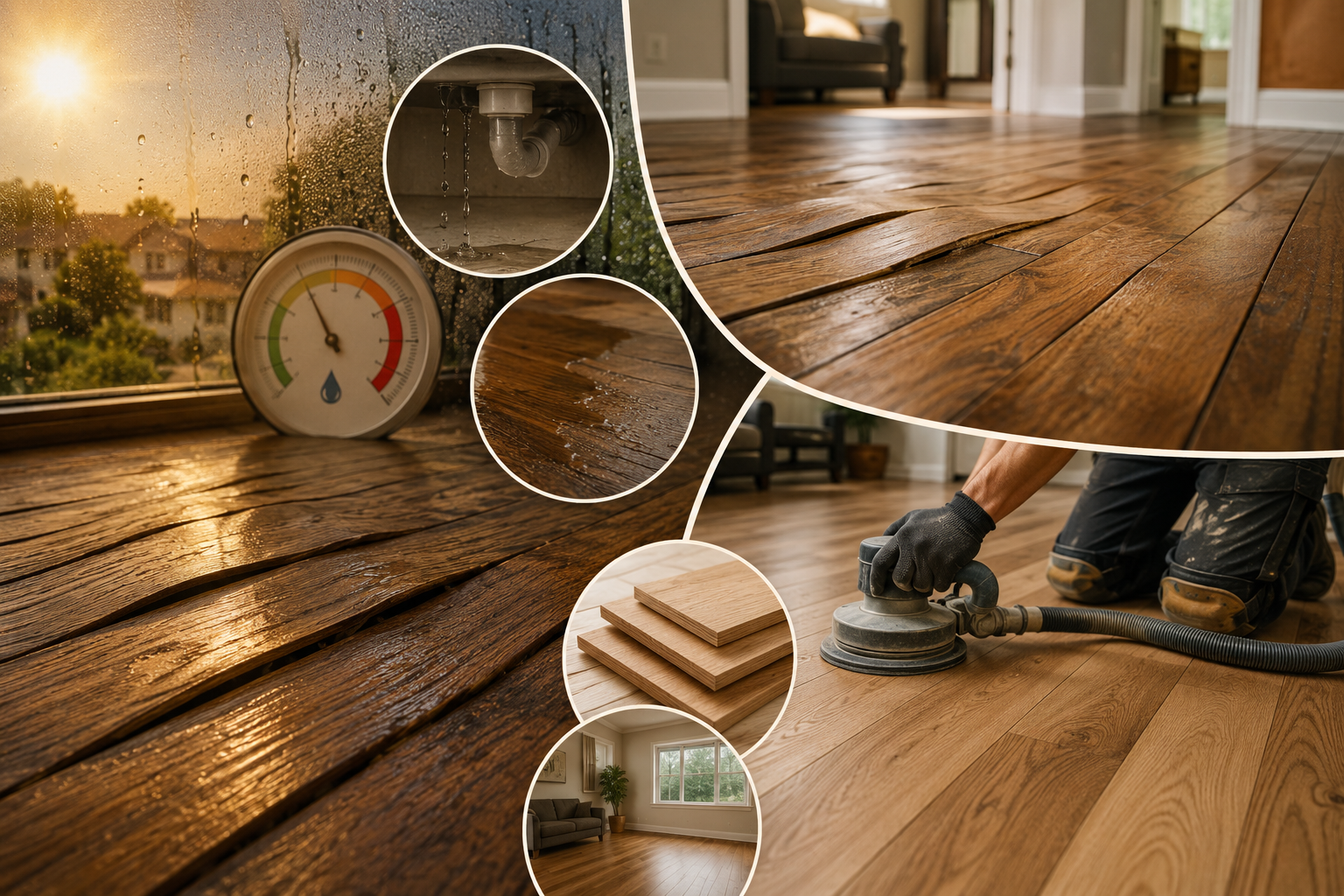
Wood is a natural material that responds to its environment. When Maryland’s summer humidity spikes, your hardwood floors absorb moisture from the air like a sponge. This causes the wood planks to expand. Since the boards are installed tightly together, they have nowhere to go but up, creating that telltale cupping or buckling effect you’re seeing.
Think of it like this: your wood floors are trying to grow in a space that won’t let them. The result? Warped, uneven surfaces that not only look terrible but can become a tripping hazard.
Common Causes of DMV Flooring Moisture Damage
Several factors contribute to wood floors buckling summer humidity in our region:
High Humidity Levels: Maryland summers regularly see humidity levels above 70%. Your floors feel every percentage point.
Poor Ventilation: Homes without proper air circulation trap moisture inside, creating the perfect storm for floor damage.
Plumbing Leaks: A slow leak under your kitchen sink or behind your washing machine can go unnoticed for weeks while silently destroying your floors.
Basement Moisture: Ground moisture seeping up through your subfloor is a sneaky culprit many homeowners miss.
HVAC Issues: When your air conditioning can’t keep up or isn’t running efficiently, indoor humidity soars.
Identifying Hardwood Floor Cupping and Buckling
What Does Cupping Look Like?
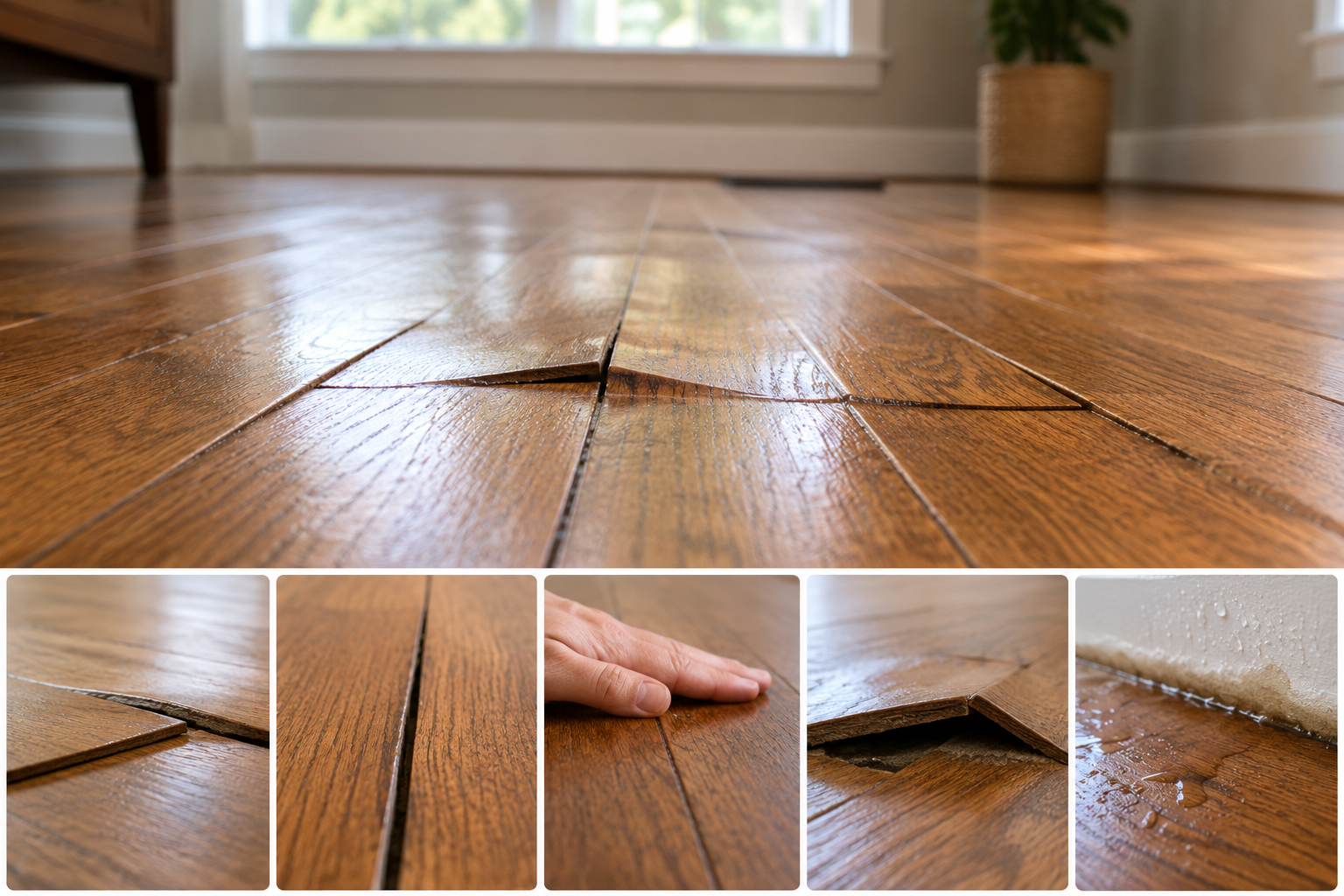
Cupping happens when the edges of your floorboards are higher than the center, creating a concave shape. If you run your hand across the floor, you’ll feel distinct ridges between each plank. This is the most common type of moisture damage in Maryland homes.
How Buckling Differs From Cupping
Buckling is more severe. The entire floorboard lifts away from the subfloor, sometimes creating gaps underneath. You might hear hollow sounds when walking across buckled areas. In extreme cases, boards can separate completely from their neighbors.
Early Warning Signs to Watch For
Catching problems early makes fix warped wood floors MD projects much simpler and less expensive. Look for these red flags:
Boards that feel slightly raised or uneven
Small gaps appearing between planks
Floors that feel spongy underfoot
Creaking or popping sounds when you walk
Visible moisture or condensation on floor surfaces
A musty smell in rooms with hardwood
Immediate Steps When You Notice Floor Damage
Stop the Moisture Source First
Before anything else, you need to identify and eliminate the moisture source. Check these areas:
Run your dehumidifier: Get indoor humidity below 50% as quickly as possible.
Inspect for leaks: Look under sinks, around toilets, near water heaters, and behind appliances.
Check your basement: Look for standing water, damp walls, or water stains.
Test your HVAC: Make sure your air conditioning is working properly and draining correctly.
Document the Damage
Take clear photos of affected areas from multiple angles. This helps with insurance claims and gives flooring professionals a head start on diagnosing your problem. Measure and note which rooms are affected and approximately how many square feet show damage.
Contact a Professional
While you might be tempted to tackle hardwood floor cupping repair Maryland projects yourself, professional assessment is worth the cost. Experts have moisture meters and other tools to measure damage you can’t see. They’ll check subfloor moisture levels and determine if the damage is reversible or if you need replacement boards.
Professional Hardwood Floor Cupping Repair Maryland Solutions
The Drying and Acclimation Process
When you call in professionals to fix warped wood floors MD style, the first step is controlled drying. This isn’t as simple as pointing fans at your floor. Technicians will:
Use commercial dehumidifiers to gradually reduce moisture
Monitor moisture content in the wood over days or weeks
Allow floors to acclimate slowly to prevent further damage
Check subfloor moisture levels regularly
Sarah from Bethesda shared her experience: “I panicked when I saw my dining room floor cupping after a leak. The repair team explained that rushing the drying process would crack my boards. They monitored everything for two weeks, and my floors actually flattened back out on their own. I couldn’t believe it.”
Sanding and Refinishing
Once moisture levels stabilize, many cupped floors can be saved through professional sanding and refinishing. This process:
Removes the raised edges and evens out the surface
Allows inspection of the wood’s condition underneath
Provides an opportunity to reseal and protect the floor
Restores your floor’s original beauty
This approach works best for solid hardwood floors. Engineered hardwood has limitations on how many times it can be sanded.
Board Replacement for Severe Cases
When DMV flooring moisture damage is too severe, some boards need replacement. Professional installers will:
Remove damaged sections carefully to avoid harming surrounding boards
Match your existing floor’s wood species, grade, and finish
Install new boards and blend them seamlessly with your existing floor
Refinish the entire area for a uniform appearance
Subfloor Repairs
Sometimes the problem goes deeper than your visible flooring. Moisture can damage the subfloor underneath, requiring more extensive repairs. Signs you need subfloor work include:
Soft spots that give when you walk
Persistent moisture readings even after surface drying
Visible mold or mildew
Structural damage to floor joists
Preventing Wood Floors Buckling Summer Humidity
Control Indoor Humidity Year-Round
Your best defense against future damage is humidity control. Here’s your game plan:
Invest in a quality dehumidifier: Whole-house systems work best, but portable units help in problem areas like basements.
Use your AC: Air conditioning naturally removes moisture from the air. Don’t turn it off completely when you’re away.
Monitor humidity levels: Buy an inexpensive hygrometer and keep indoor humidity between 30-50% year-round.
Ventilate bathrooms and kitchens: Run exhaust fans during and after showers or cooking. Moisture from these activities spreads throughout your home.
Proper Floor Installation Matters
If you’re installing new floors or replacing damaged sections, proper installation prevents future problems:
Acclimate wood before installation: Let flooring materials sit in your home for at least three days before installation so they adjust to your home’s conditions.
Leave expansion gaps: Professional installers leave space around room perimeters for natural wood expansion and contraction.
Use moisture barriers: Especially important in basements and over concrete subfloors, moisture barriers protect your investment.
Choose appropriate finishes: Quality sealants and finishes create a protective barrier against moisture infiltration.
Regular Maintenance and Inspections
Think of floor maintenance like car maintenance. Regular attention prevents major problems:
Clean spills immediately, especially near kitchens and bathrooms
Use mats at entryways to reduce tracked-in moisture
Inspect floors seasonally for early warning signs
Refinish floors every 7-10 years to maintain protective coating
Address small issues before they become big problems
Tom, a property manager in Silver Spring, told us: “I manage 15 rental properties with hardwood floors. Since I started quarterly inspections and installed dehumidifiers in each basement, I’ve cut my floor repair costs by 80%. It’s all about catching things early.”
When to Call for Help
DIY vs. Professional Repair
Small areas of minor cupping might flatten out on their own once you control humidity. You can handle this yourself by:
Running dehumidifiers
Improving ventilation
Monitoring the situation over several weeks
Call professionals for hardwood floor cupping repair Maryland when you see:
Cupping or buckling covering more than a few square feet
Boards that have separated or lifted significantly
Any sign of mold or mildew
Damage from a major leak or flood
Persistent problems despite humidity control
Choosing the Right Flooring Professional
Not all flooring companies have equal experience with moisture damage. Look for:
Moisture remediation experience: Ask specifically about their process for drying and repairing water-damaged floors.
Proper equipment: Reputable companies use moisture meters, commercial dehumidifiers, and air movers.
References and reviews: Check online reviews and ask for references from past clients with similar issues.
Clear estimates: Get detailed written estimates that explain each step of the repair process and associated costs.
Insurance and licensing: Verify they carry proper insurance and any required state or local licenses.
The Cost Factor
What to Expect for Repairs
Costs to fix warped wood floors MD vary widely based on damage severity:
Minor cupping repair: $3-5 per square foot for drying and monitoring
Sanding and refinishing: $3-8 per square foot depending on your floor type and finish choice
Board replacement: $12-25 per square foot including materials and labor
Subfloor repair: $25-50 per square foot for extensive damage
These are ballpark figures. Your actual costs depend on your specific situation, floor type, and the extent of damage.
Insurance Coverage
Many homeowners don’t realize their insurance might cover moisture damage. Your policy typically covers:
Sudden and accidental water damage (like a burst pipe)
Resulting floor damage from covered events
Your policy probably won’t cover:
Damage from long-term neglect or maintenance issues
Gradual leaks you should have noticed and fixed
Flood damage (requires separate flood insurance)
File claims promptly and document everything thoroughly. Take photos, save receipts, and keep detailed records of all communications.
Real Stories From Maryland Homeowners
The Bethesda Kitchen Disaster
Jennifer noticed her kitchen floor starting to buckle last July during a particularly humid stretch. “I thought it was just the heat affecting things. Within a week, I had a two-inch gap under my island where the floor had lifted completely.”
She called a local flooring company specializing in DMV flooring moisture damage. They found a slow leak from her dishwasher that had been dripping for months. “The repair took three weeks from start to finish. They dried everything out, replaced eight damaged boards, and refinished the whole kitchen. You’d never know there was a problem.”
The Rockville Basement Surprise
Mike finished his basement two years ago with beautiful oak flooring. Last summer, he noticed cupping throughout the space. “I was furious. I thought the installer had done a bad job.”
Testing revealed the real culprit: groundwater seeping through the foundation. “The flooring company explained that no floor can withstand constant moisture from below. They helped me waterproof the foundation, installed a proper moisture barrier, and then replaced the damaged sections. They also taught me about maintaining proper humidity levels. It was a learning experience.”
Take Action Before Damage Worsens
Your floors won’t fix themselves, and moisture damage only gets worse with time. The good news? Most wood floors buckling summer humidity problems are fixable when you address them quickly.
Start by getting your humidity under control today. Check for leaks, run your dehumidifier, and monitor the situation. If you’re seeing significant cupping or buckling, don’t wait. Call a flooring professional who specializes in hardwood floor cupping repair Maryland to assess the damage.
Remember, your floors are a major investment in your home. Protecting them from moisture damage preserves your home’s value and saves you money in the long run.
Get Professional Help Today
If you’re dealing with warped, cupped, or buckled hardwood floors, we’re here to help. Our team has years of experience helping Maryland homeowners fix warped wood floors MD and prevent future damage. We’ll assess your situation, explain your options clearly, and provide honest recommendations based on what’s best for your home and budget.
Don’t let another humid Maryland summer destroy your beautiful hardwood floors. Contact us today for a free assessment and estimate. We’ll help you understand exactly what’s happening with your floors and create a repair plan that makes sense for you.
Your floors can look beautiful again. Let’s make it happen together.
Frequently Asked Questions
Can cupped hardwood floors go back to normal on their own?
Yes, minor cupping can reverse itself if you address the moisture source quickly. Once you control indoor humidity and eliminate leaks, wood floors often flatten back out over several weeks or months as they dry. More severe cupping or buckling typically requires professional sanding and refinishing to restore a level surface.
How long does it take to repair buckled hardwood floors in Maryland?
The timeline depends on damage severity. Simple drying and acclimation can take 2-4 weeks as professionals slowly reduce moisture levels. If sanding and refinishing are needed, add another 3-5 days for the actual work. Board replacement projects with subfloor repairs can take 1-2 weeks from start to finish.
What humidity level prevents hardwood floor damage?
Keep indoor humidity between 30-50% year-round to protect your hardwood floors. Maryland summers often push outdoor humidity above 70%, so run your air conditioning and dehumidifiers consistently. Invest in a hygrometer to monitor levels in rooms with hardwood flooring.
Will homeowners insurance cover buckled hardwood floors?
Insurance typically covers sudden water damage from events like burst pipes or appliance malfunctions, including resulting floor damage. Gradual damage from poor maintenance, long-term leaks, or high humidity usually isn’t covered. Flood damage requires separate flood insurance. Review your specific policy and document all damage thoroughly when filing claims.
Should I replace or repair cupped hardwood floors?
Repair is usually the better choice for solid hardwood floors with minor to moderate cupping. Professional sanding and refinishing cost less than replacement and preserve your original floors. Replace boards only when damage is severe, when mold is present, or when subfloor damage makes repair impractical. A flooring professional can assess your specific situation and recommend the most cost-effective solution.
Ready to get this done in your home?
5.0-star Google rating · 500+ reviews · MHIC #104041 · Licensed & Insured
Get My Free Estimate Call 240-246-4561
Related services: Hardwood Floor RefinishingHardwood Floor RestorationHardwood Floor Staining
Contact Us
Fill out the form below and an AG Construction representative will contact you soon.


Maryland’s Premier Flooring Company
full-service flooring contractor
Whether you own a home or business, we’re your single source for complete flooring installation services! Our comprehensive services include:
- Hardwood staining, sanding, refinishing, restoration, and more!
- Carpet removal and installation
- Vinyl luxury plank replacement and installation
- Vinyl tile and COREtec installation
- And more!