

back to blog

Soundproofing Your Floors: The Best Acoustic Underlayment Options for DMV Condos and Townhomes
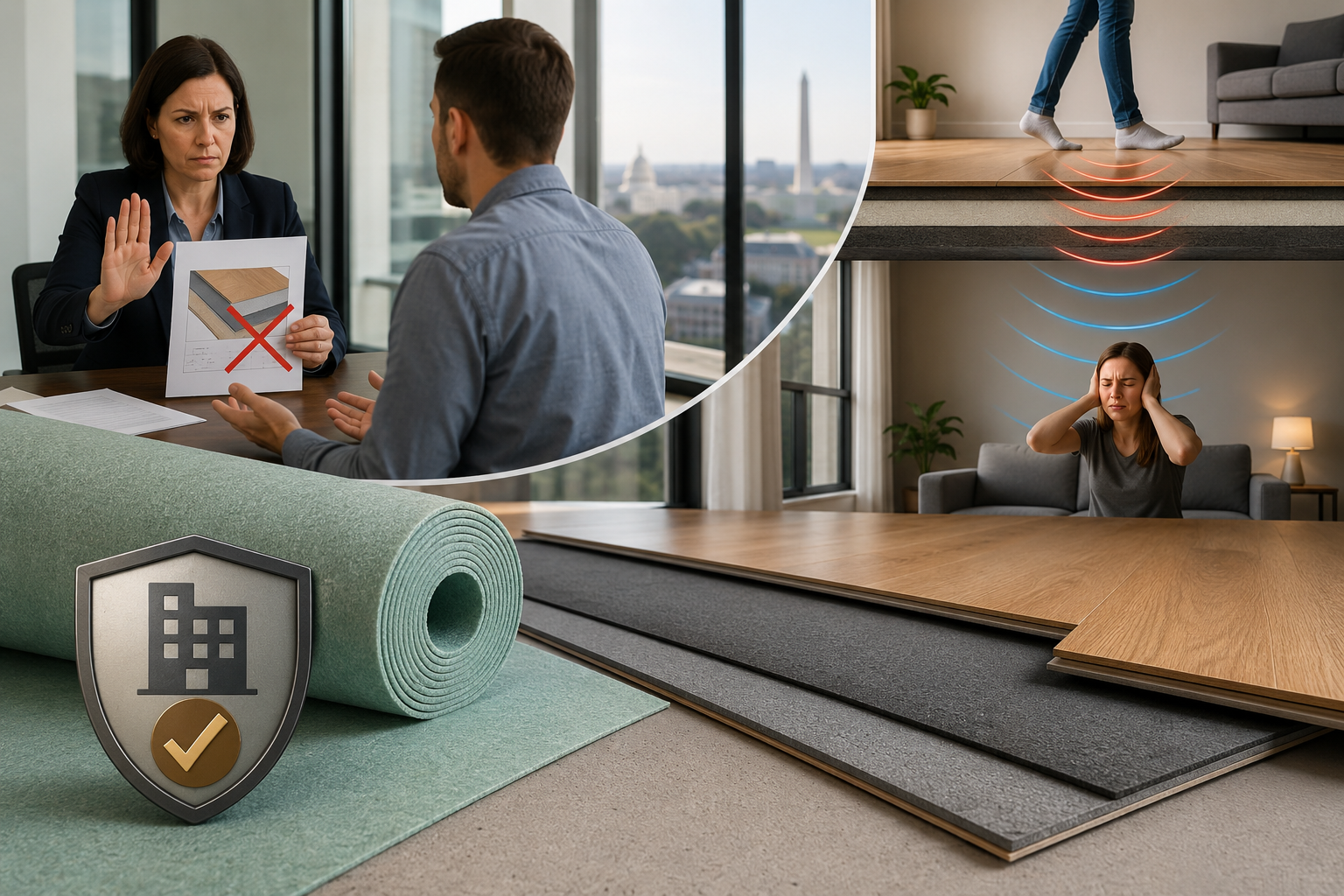
Most condo owners in the DC area face strict HOA rules before installing new floors. Ignoring soundproofing could lead to costly delays or rejected permits. If you want to meet “condo floor soundproofing Maryland” standards and find the right HOA approved flooring underlayment DC trusts, this guide will help you choose the best STC IIC rating floor underlayment DMV condos require.
Understanding HOA Soundproofing Requirements in the DMV
Why Your HOA Cares About Floor Noise
Your neighbors below you want peace and quiet. That’s why most condos and townhomes in Bethesda, Arlington, DC, and Silver Spring have strict condo hardwood installation rules. When you walk across hard floors without proper underlayment, the sound travels straight through to the unit below.
HOAs set these standards to protect everyone’s quality of life. They’re not trying to make your renovation harder. They’re preventing neighbor disputes before they start.
What STC and IIC Ratings Mean
You’ll see two main numbers when shopping for condo floor soundproofing Maryland products: STC and IIC.
STC (Sound Transmission Class) measures how well your floor blocks airborne sounds like voices and music. IIC (Impact Insulation Class) measures how well it dampens footsteps, dropped objects, and other impact noises.
Most HOAs in the DMV require a minimum IIC rating of 50 or higher. Some luxury buildings ask for IIC 65 or even 70. Your HOA documents will spell out exactly what you need.
Think of it this way: a higher number means better soundproofing. An IIC 50 floor is okay. An IIC 65 floor is great. An IIC 70 floor is exceptional.
Common HOA Requirements Across DC, Maryland, and Virginia
Typical Minimum Standards
After reviewing dozens of HOA bylaws across the DMV, here’s what most require:
Minimum IIC rating of 50 to 55
Minimum STC rating of 50 to 55
Professional installation with proper documentation
Submission of product spec sheets before approval
Post-installation inspection or certification
Some buildings in downtown DC and Bethesda have stricter rules. They might require IIC 60 or 65, especially in newer luxury condos.
Documentation You’ll Need
Before you buy a single plank of flooring, gather these items:
Your HOA’s architectural guidelines
The flooring alteration application form
Product specification sheets for your chosen underlayment
Contractor license and insurance information
Installation timeline and noise mitigation plan
One condo owner in Silver Spring told us, “I thought I could skip the paperwork and just install my floors. My HOA stopped the project on day one and fined me $500. Learn from my mistake and get approval first.”
Types of HOA Approved Flooring Underlayment DC Residents Choose
Cork Underlayment
Cork is a natural material that offers good sound dampening. It typically provides an IIC improvement of 20 to 25 points.
Pros:
Natural and eco-friendly
Good moisture resistance
Comfortable underfoot
Works well for quiet flooring townhome MD installations
Cons:
Can be pricey
May not meet higher IIC requirements on its own
Requires careful installation to avoid gaps
Cork works best when you combine it with other soundproofing methods. Many townhome owners in Rockville use cork under engineered hardwood with great results.
Rubber Underlayment
Rubber underlayment is one of the best performers for impact sound reduction. High-quality rubber products can improve your IIC rating by 25 to 30 points or more.
Pros:
Excellent sound blocking
Durable and long-lasting
Moisture resistant
Often meets strict HOA standards without additional layers
Cons:
Higher cost than foam options
Can have an odor when first installed
Heavier and harder to work with
Sarah from Arlington shared her experience: “My HOA required IIC 65. My contractor recommended a 6mm rubber underlayment. We tested it and hit IIC 67. My downstairs neighbor said she barely hears us anymore, even with two kids running around.”
Mass Loaded Vinyl (MLV)
MLV is a dense, flexible material that blocks both airborne and impact sounds. It’s often used in combination with other underlayments.
Pros:
Very effective for sound blocking
Thin profile won’t raise floor height much
Can help meet demanding STC IIC rating floor underlayment DMV requirements
Cons:
Expensive
Heavy and difficult to install
Usually needs professional installation
Foam Underlayment
Basic foam is the cheapest option, but it rarely meets HOA requirements on its own.
Pros:
Affordable
Easy to install
Good moisture barrier
Cons:
Poor sound blocking (usually only IIC improvement of 10 to 15 points)
Compresses over time
Not suitable for most condo hardwood installation rules
Only consider foam if your HOA has very lenient requirements or if you’re installing over concrete in a single-family home.
Combination Systems
Many contractors recommend layered systems that combine multiple materials. For example:
MLV base layer + cork top layer
Rubber underlayment + acoustic foam
Specialized multi-layer products designed for high IIC ratings
These systems can achieve IIC ratings of 65, 70, or higher. They’re perfect for luxury condos with strict requirements.
How to Choose the Right Product for Your Situation
Step 1: Check Your HOA Documents
Pull out your condo or HOA bylaws. Look for the section on flooring alterations or architectural modifications. Write down the exact IIC and STC numbers required.
If you can’t find this information, call your property manager. Don’t guess. Installing the wrong underlayment means ripping everything out and starting over.
Board members and property managers: when you need one flooring and underlayment spec that works across many units, our multifamily flooring team can put together packages that meet your IIC and STC requirements.
Step 2: Assess Your Subfloor
What’s under your current flooring? Is it concrete or wood?
Concrete subfloors are better for sound blocking. Wood subfloors transmit more sound and usually need thicker, better underlayment.
Check for moisture issues too. Basements and ground-floor units may need moisture barriers in addition to sound control.
Step 3: Consider Your Flooring Type
What are you installing on top?
Hardwood: Needs underlayment that won’t compress or shift
Laminate: Often comes with attached underlayment, but you may need to add more
Luxury vinyl plank: Pairs well with cork or rubber
Tile: Usually installed directly on concrete, but you can add sound mat underneath
Your flooring choice affects which underlayment works best.
Step 4: Calculate Your Budget
Quality condo floor soundproofing Maryland products cost between $1 and $4 per square foot. Installation adds another $1 to $2 per square foot if you hire a pro.
For a 1,000 square foot condo:
Budget option: $1,000 to $1,500
Mid-range: $2,000 to $3,500
Premium: $4,000 to $6,000
Yes, it’s an investment. But failing your HOA inspection costs more in the long run.
Step 5: Get Professional Testing
Some HOA approved flooring underlayment DC contractors offer pre-installation testing. They’ll install a small sample and measure the actual IIC rating in your specific building.
This costs a few hundred dollars but guarantees you’ll pass inspection. It’s worth it for expensive projects or strict HOAs.
Installation Tips for Maximum Soundproofing
Hire a Licensed Contractor
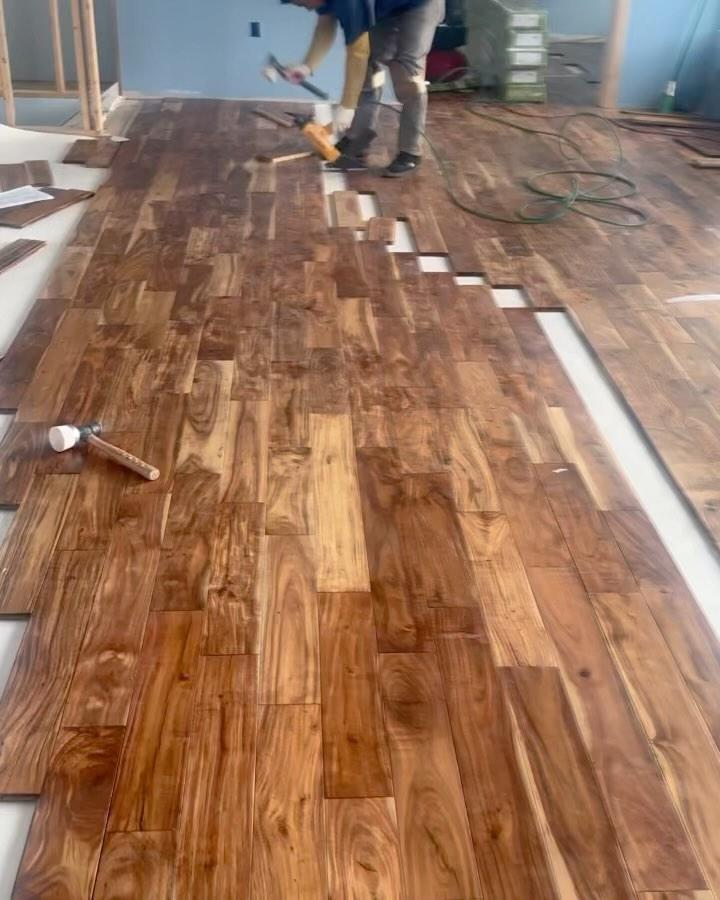
DIY installation might save money, but HOAs often require professional installation. Plus, improper installation can void your underlayment warranty and fail to meet IIC requirements.
A good contractor knows how to:
Seal all seams properly
Extend underlayment up walls to prevent sound flanking
Install transition strips correctly
Document everything for HOA approval
Don’t Skip the Edges
Sound travels through gaps. Make sure your installer runs underlayment right up to the walls and seals all edges. Some products require special tape for seams.
Plan for Transitions
Doorways and room transitions need special attention. Your contractor should use proper transition strips that don’t create sound bridges.
Allow for Acclimation
Let your flooring materials sit in your condo for 48 to 72 hours before installation. This prevents expansion and contraction that could create gaps in your soundproofing.
Real Stories from DMV Condo Owners
Mike’s Bethesda Condo Success
“I bought a condo in downtown Bethesda with original carpet from the 1980s. I wanted hardwood, but my HOA required IIC 60. My contractor suggested a 6mm rubber underlayment with a cork top layer. We submitted the specs, got approval in two weeks, and finished the project in three days. My neighbor below me sent a thank-you note saying she couldn’t even tell we’d done construction.”
Jennifer’s Arlington Townhome Challenge
“Our townhome HOA said we needed IIC 55 for our third-floor bedrooms. We tried to save money with basic foam underlayment. The HOA inspector failed us immediately. We had to rip everything up and start over with proper rubber underlayment. The second time cost us an extra $3,000 and two weeks of delay. Get it right the first time.”
David’s Silver Spring Apartment
“As a property manager, I oversee 50 rental units in Silver Spring. When we renovate, we always use high-quality STC IIC rating floor underlayment DMV products. It costs more upfront, but we get zero noise complaints. Happy tenants stay longer, and that saves us money on turnover.”
Working with Your HOA Board
Submit Complete Applications
Give your HOA everything they ask for in one package:
Completed application form
Product specification sheets
Contractor information
Timeline
Proof of insurance
Incomplete applications just slow things down.
Be Patient with Approval Times
Most HOAs meet monthly. Your application might sit for two to four weeks before review. Submit early and plan accordingly.
Respond Quickly to Questions
If the board asks for additional information, reply within 24 hours. This shows you’re serious and professional.
Keep Communication Records
Save all emails and letters. If there’s ever a dispute, you’ll have documentation of what was approved.
Maintenance and Long-Term Performance
What to Expect After Installation
Good underlayment should last as long as your flooring, often 20 to 30 years. You won’t need to touch it once it’s installed correctly.
Your floors might feel slightly softer underfoot with quality underlayment. This is normal and actually means the product is working to absorb impact.
Monitoring Sound Performance
After installation, check in with your downstairs neighbors. Ask if they notice any noise issues. Catching problems early makes them easier to fix.
Some HOAs require post-installation testing or certification. Keep these documents with your condo records.
When to Consider Upgrades
If you’re installing temporary flooring with plans to upgrade later, you might be tempted to use cheaper underlayment now. Don’t do it.
Installing proper quiet flooring townhome MD underlayment once is cheaper than doing it twice. Even if you change your flooring style later, good underlayment works with any hard surface.
Frequently Asked Questions
Can I reuse underlayment from previous flooring?
Usually no. Underlayment compresses and degrades over time. Plus, your HOA likely requires new materials with current certifications.
Do I need underlayment over concrete?
Yes, if your HOA requires specific IIC ratings. Concrete alone doesn’t meet most condo soundproofing standards.
What if my neighbor below me complains after installation?
First, check if you followed all HOA requirements. If you did and have documentation, you’re protected. If you didn’t, you may need to add more soundproofing.
Can I install underlayment myself to save money?
Check your HOA rules first. Many require licensed contractors. Even if DIY is allowed, improper installation can fail inspection.
How much does professional installation cost?
Expect $1 to $2 per square foot for labor, plus materials. Get three quotes and check references.
Making Your Decision
Choosing the right condo floor soundproofing Maryland solution doesn’t have to be stressful. Follow these steps:
Read your HOA requirements carefully
Consult with experienced local contractors
Choose products that exceed minimum standards
Get everything approved before starting work
Hire qualified installers
Keep all documentation
The extra time you spend planning saves money and headaches later.
Getting Started with Your Project
Ready to move forward? Here’s your action plan:
Contact your HOA or property manager today. Request your architectural guidelines and flooring alteration application. While you wait for those documents, start researching contractors who specialize in condo hardwood installation rules and HOA approved flooring underlayment DC projects.
Get at least three quotes from licensed contractors with experience in your building or similar properties. Ask to see examples of previous HOA applications they’ve submitted. Check their references and verify their insurance.
Schedule consultations and ask about the specific STC IIC rating floor underlayment DMV products they recommend. A good contractor will explain your options clearly and help you choose the best solution for your budget and HOA requirements.
Don’t let HOA requirements intimidate you. Thousands of condo and townhome owners across DC, Maryland, and Virginia successfully install beautiful hard-surface floors every year. With proper planning and the right underlayment, you can too.
Your new floors are closer than you think. Take that first step today by pulling out your HOA documents and making a list of questions. Before you know it, you’ll be enjoying gorgeous new floors that keep your neighbors happy and your HOA satisfied.
Need help choosing the right underlayment or finding qualified installers in your area? Reach out to local flooring specialists who understand DMV HOA requirements. They can guide you through every step of the process and ensure your project goes smoothly from approval to final inspection.
Your dream floors are waiting. Start your project the right way with proper planning and quality materials. You’ll be glad you took the time to do it right.
Ready to get this done in your home?
5.0-star Google rating · 500+ reviews · MHIC #104041 · Licensed & Insured
Get My Free Estimate Call 240-246-4561
Related services: LVP InstallationHardwood Floor InstallationCarpet Installation
Contact Us
Fill out the form below and an AG Construction representative will contact you soon.


Maryland’s Premier Flooring Company
full-service flooring contractor
Whether you own a home or business, we’re your single source for complete flooring installation services! Our comprehensive services include:
- Hardwood staining, sanding, refinishing, restoration, and more!
- Carpet removal and installation
- Vinyl luxury plank replacement and installation
- Vinyl tile and COREtec installation
- And more!