

Multifamily, Apartment and HOA Flooring
5.0-star Google rating · 500+ reviews · MHIC #104041 · Licensed & Insured
Get A Free Quote Today!
Calls answered or returned the same day, Saturdays included.
Flooring in a multifamily building is a different purchase from flooring in a house. You are not buying a floor you will live on, you are buying a floor that has to survive tenants you have not met yet, get installed between one lease and the next, and still look acceptable to a prospective renter or a board member three years from now.
AG Construction installs and restores flooring for apartment buildings, condo associations, HOAs and rental portfolios across Maryland and Northern Virginia. Unit turns, corridors, lobbies, stairwells, clubhouses and common-element wood floors. We are MHIC licensed and insured, MHIC #104041, and estimates are free. Call 240-246-4561 with a unit count or a square footage and we will put a written number against it.
What We Do in Multifamily and HOA Buildings
Unit Turn Flooring
Rip out, prep and reinstall between tenancies, on the clock, with a spec that repeats across the portfolio.
Corridors and Lobbies
The highest-traffic floors in the building and the first thing a prospective tenant sees. Carpet, carpet tile, LVP or restored wood.
Common-Element Wood Restoration
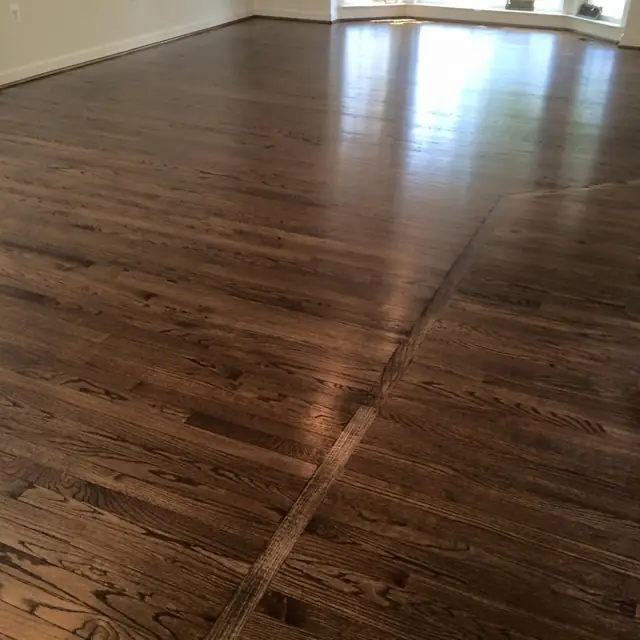
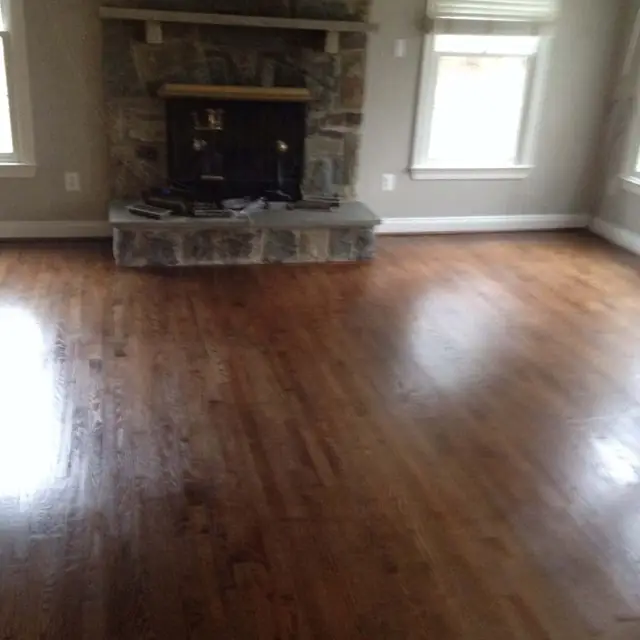
HOA and condo wood floors in lobbies, party rooms and hallways, restored rather than replaced where the wood is sound.
Stairs and Landings
The part of the building that wears fastest and gets quoted last. Treads, risers, landings and nosings.
Clubhouses and Leasing Offices
Amenity space where the floor is doing marketing work, so it gets a residential-grade finish on a commercial-grade schedule.
Luxury Vinyl Plank and Tile
The default multifamily surface for good reason: waterproof core, wood look, and it survives a bad tenant.
Amenity Gym and Fitness Rooms
Gym and athletic hardwood flooring for amenity gyms, fitness rooms and multipurpose spaces, installed, sanded and recoated.
Speccing a Rental Floor: What Actually Fails
Flooring specified for a rental fails in a small number of predictable ways, and the spec is where you prevent all of them.
- Wear layer, not total thickness. The number that predicts how long a luxury vinyl floor keeps looking new is the wear layer in mils, not the overall plank thickness. Thickness buys you rigidity and sound, the wear layer buys you life. Our guide to the LVP wear layer and mil thickness is the detail version, and it is worth reading before you sign off a spec across a whole portfolio.
- Dryback versus rigid core. Glue-down dryback plank is thin, cheap per square foot and very repairable, but it demands a flat, dry, well-prepared subfloor and it telegraphs every defect underneath. Rigid core floats, hides more, and installs faster, but a damaged plank in the middle of a room is a bigger job to swap. Our COREtec versus standard LVP durability comparison covers the trade-off.
- Water at the perimeter. Waterproof plank does not make a waterproof floor. Dishwashers, water heaters and washer connections fail at the edges and under cabinets, and what gets ruined is the subfloor, not the plank. Detailing and transitions matter more than the material brochure suggests.
- Subfloor prep skipped to hit a turn date. The single most common cause of a floor that has to be redone inside two years. Nothing installed over an unprepared subfloor stays flat, and the failure shows up after the tenant moves in.
- Non-repeatable specs. If every unit gets whatever was on sale that month, you cannot hold attic stock, you cannot patch a room, and every turn is a fresh negotiation. A portfolio spec you can actually reorder is worth real money.
HOA and Condo Common-Element Floor Restoration
Common-element floors are a specific problem: the wood is often original, the association owns it collectively, the money has to be voted through, and the work has to happen in a building nobody is moving out of.
Where the wood is structurally sound, restoration beats replacement on every axis a board cares about. It costs a fraction of new flooring, it does not need material lead time, it keeps the character of an older lobby or hallway, and it can be phased so residents always have a route in and out. Where it is not sound, we say so at the estimate rather than after the vote.
Boards also need a document, not just a price. Ask for the estimate to spell out the scope, the sequence, the areas affected on each day and the return-to-service windows, and you have something that can be circulated and approved rather than something that has to be explained in a meeting. The mechanics of the work itself are on the commercial floor restoration page.
Unit Turns and the Schedule
A unit turn is a scheduling problem wearing a flooring problem as a costume. The floor is rarely the hard part. The hard part is that it sits between the old tenant leaving and the new one arriving, behind paint and ahead of the final clean, and everything else in the turn depends on the date it finishes.
So quote it that way. When you send a turn request, tell us the move-out date, the move-in date, which trades come before and after us, whether the unit is on an upper floor, whether there is an elevator we are allowed to use, and where material can be staged. Those five facts decide whether a date is real. A run of units with a repeatable spec schedules far better than the same number of units with five different materials.
For portfolios, the useful conversation is a standing spec and a standing process rather than a quote per unit: one material list, one prep standard, one set of transitions, and a known number per unit type. Send the unit mix and the typical square footage per type and we will price it that way.
Corridors, Stairwells and the Floors That Wear First
Common areas take more traffic in a month than a unit does in a year, and they are the floors prospective residents judge the building by.
Corridors are usually carpet, carpet tile or resilient plank. Carpet tile is worth considering anywhere spot damage is likely, because a damaged tile is swapped rather than the run being replaced. We install carpet from Shaw Floors, Mohawk, Phenix Flooring and Beaulieu, and luxury vinyl from COREtec and NuCore lines among others, so there is no house brand pushing the recommendation.
Stairs are the item most often left out of a scope and then priced as a change order. Treads, risers, landings and nosings are all separate labor, and stairs in a multifamily building carry both the traffic and the noise complaints. Include them in the request and the number you get back will actually be the number.
Entrances deserve one specific mention: walk-off matting at every exterior door does more to extend the life of every floor behind it than any upgrade you can buy in the material spec. Grit and de-icing salt from the parking lot are what actually kills lobby and corridor floors.
What Moves the Price on a Multifamily Job
- Unit count and repeatability. Twenty identical units price very differently from twenty different ones.
- What comes out. Carpet and pad is fast. Glued-down vinyl, VCT or ceramic on a slab is not, and disposal is a real line.
- Subfloor condition. Especially over concrete, and especially below grade, where moisture testing is not optional.
- Access. Upper floors, elevator availability and permitted work hours change the labor more than the material does.
- Occupied versus vacant. Common areas in an occupied building have to be phased so residents always have a route through.
- Transitions, base and stairs. The lines that get forgotten in a request and then appear in the bid you did not expect.
For a frame of reference on the wood side, our residential refinishing packages start around $995 for a single room. Multifamily work is quoted per job, and per unit type where a portfolio is involved.
Where We Work
We work Montgomery, Howard, Frederick, Anne Arundel, Carroll, Prince George's and Baltimore Counties in Maryland and Fairfax, Arlington and Loudoun Counties in Northern Virginia. We do not travel to the Eastern Shore or the Delaware beaches. That covers the apartment and condo stock in Montgomery County, the Howard County and Columbia corridor, the Towson and Hunt Valley corridor in Baltimore County, and Arlington, Alexandria, Falls Church, Fairfax, McLean, Tysons and Loudoun on the Virginia side.
For the Virginia side specifically, see flooring contractors in Northern Virginia.
What to Send Us for a Commercial Quote
You will get a faster and far more accurate answer if the first message carries these. None of it has to be exact, and if you only have half of it, send half of it.
- The company, property or organization name
- The property address, or at least the city
- Approximate square footage, even if it is a rough number
- The date it has to be finished by, and why
- Whether the space stays occupied, the hours work is allowed on site, and any paperwork your process requires before work can start
- Photos of the worst area, plus a floor plan or spec if you have one
Send it through the commercial quote form on this page or call 240-246-4561. If the scope is clear enough from photos and square footage we will tell you a realistic range before anyone books a walkthrough, and the written estimate itself is free either way.
Why Work With AG Construction MD
- MHIC #104041, licensed and insured. That is the license Maryland requires, and it is verifiable on the state register.
- Owner Aaron Goodman has 15 years of hands-on flooring experience across Maryland and Northern Virginia and personally oversees every project.
- Free, written, no-obligation estimates on every commercial project, including budget numbers for work that is not approved yet.
- One contractor for hardwood, sanding, staining, refinishing, restoration, luxury vinyl, laminate and carpet, so nobody is pointing at somebody else mid-job.
- A service-area business, not a showroom. We come to the property, and there is no retail markup on the quote.
- Scheduling built around your operating hours wherever the job allows. Office hours are Monday to Friday 8am to 5pm and Saturday 9am to 5pm.
AG Construction MD LLC is based in Woodbine, MD 21797 and is a service-area business. Call 240-246-4561 for a free estimate or request a quote online.